


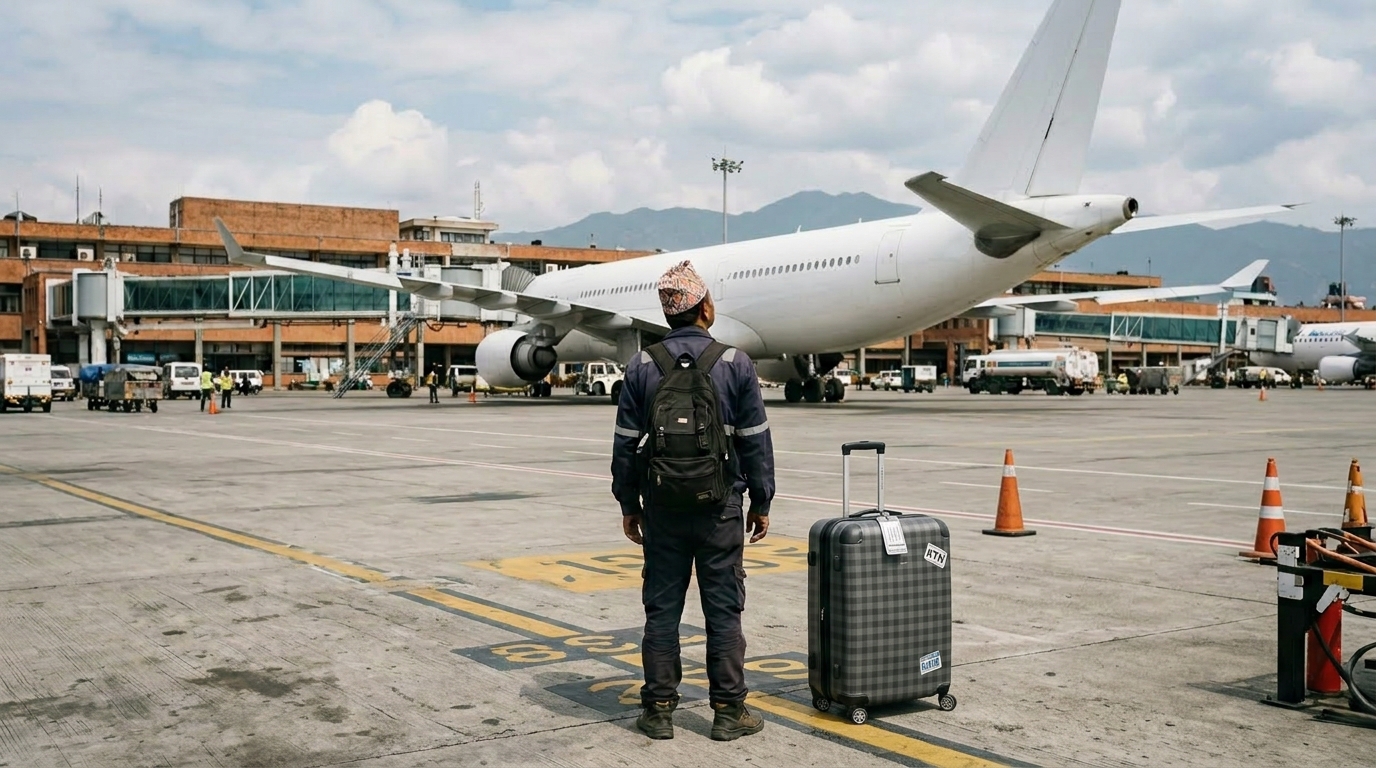
Kathmandu / Global Workforce Desk | Manpower Global
With an estimated 1.7 million Nepali migrant workers currently employed across Gulf and Middle Eastern nations, escalating geopolitical tensions in the region are raising urgent concerns about the safety of workers and the economic stability of Nepal.
Countries such as Saudi Arabia, Qatar, United Arab Emirates, Kuwait, Bahrain, and Oman host the majority of Nepal’s migrant labor force. These workers are employed in construction, hospitality, healthcare support, logistics, oil & gas, domestic services, and industrial sectors — forming a vital backbone of the regional workforce.
If the conflict intensifies and large-scale evacuations or job losses occur, Nepal could face one of the most severe labor and economic crises in its modern history.
Immediate Impact on Workers
A sudden forced return would create:
• Mass unemployment pressure in Nepal’s already fragile job market
• Financial hardship for families dependent on remittances
• Debt crises for workers who borrowed heavily to migrate
• Psychological and social stress due to disrupted livelihoods
Many workers have invested years abroad to secure financial stability for their families. A premature return could wipe out savings and destabilize thousands of households.
Economic Shock to Nepal
Remittances from migrant workers contribute nearly 25–30% of Nepal’s GDP, making foreign employment one of the country’s largest economic pillars.
A large-scale return could trigger:
• Sharp decline in foreign currency reserves
• Pressure on the Nepali Rupee
• Increased inflation
• Slowdown in banking liquidity
• Reduction in household spending nationwide
Such a shock would not only affect individual families but also impact real estate, banking, retail trade, and small enterprises across Nepal.
Structural Vulnerability Exposed
The situation highlights Nepal’s structural dependency on overseas labor markets. For decades, foreign employment has absorbed domestic unemployment. However, global conflicts, pandemics, and geopolitical shifts expose the vulnerability of a remittance-driven economy.
The crisis underlines the urgent need for:
• Diversification of foreign labor destinations (Europe, East Asia, regulated markets)
• Stronger bilateral labor agreements
• Skill upgradation aligned with global demand
• Reintegration programs for returnee migrants
• Domestic industrial growth and job creation
A Strategic Turning Point for Workforce Policy
For manpower agencies and workforce developers, this moment demands responsible action:
• Prioritize worker safety and compliance
• Ensure transparent contracts and emergency contingency planning
• Strengthen employer relations across diversified markets
• Prepare reskilling frameworks for high-demand sectors in Europe and beyond
At ManpowerEU.com, we believe the future of labor migration must be built on stability, compliance, diversification, and skill excellence — not over-reliance on a single region.


